Not a Zoo. A Living Laboratory.
The world's most advanced platform for exotic animal medicine, species preservation, and One Health research.
The Conservation Mission
Apex Las Vegas is built on a single conviction: that animal health, human health, and planetary health are inseparable. This is the foundation of One Health science, and it is the operating principle of every system on our campus.
Conservation at Apex is not a display. It is research in motion, surgery in progress, and species recovery in real time, open to the world through technology and education.
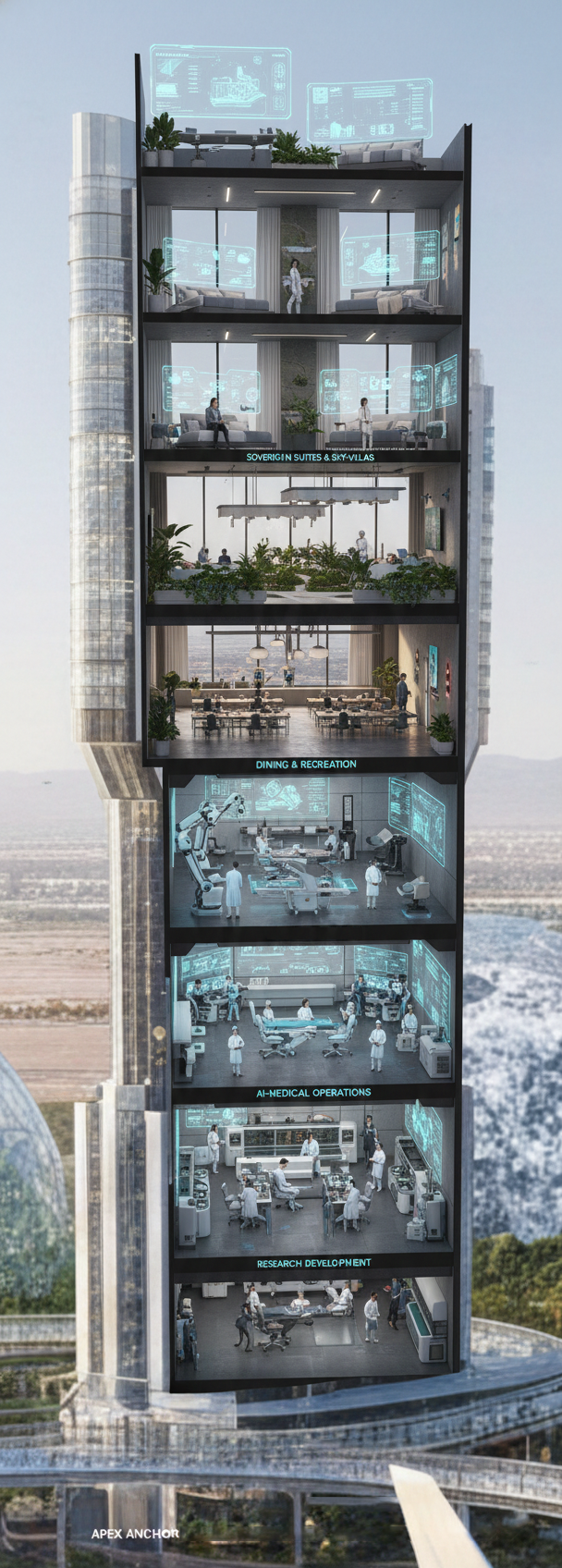
The APEX Anchor — The APEX Clinic for Animals
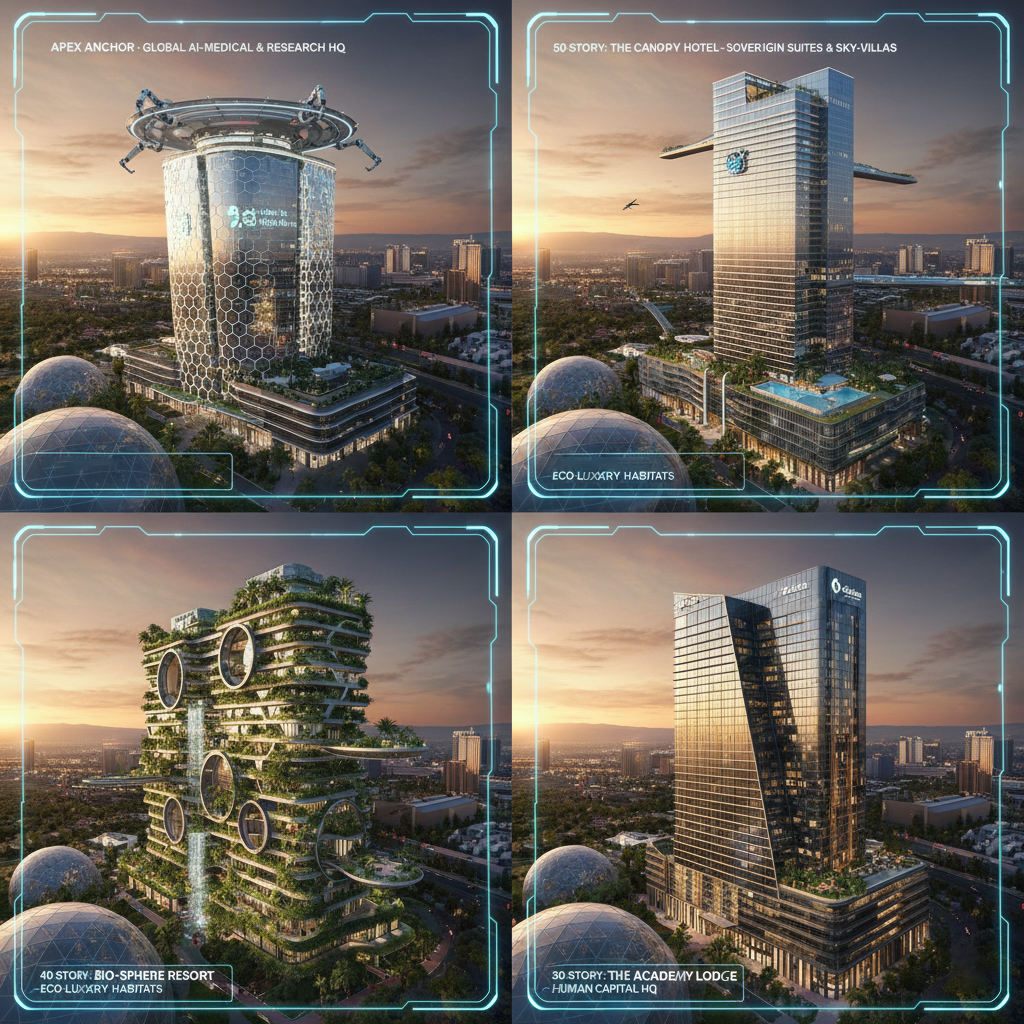
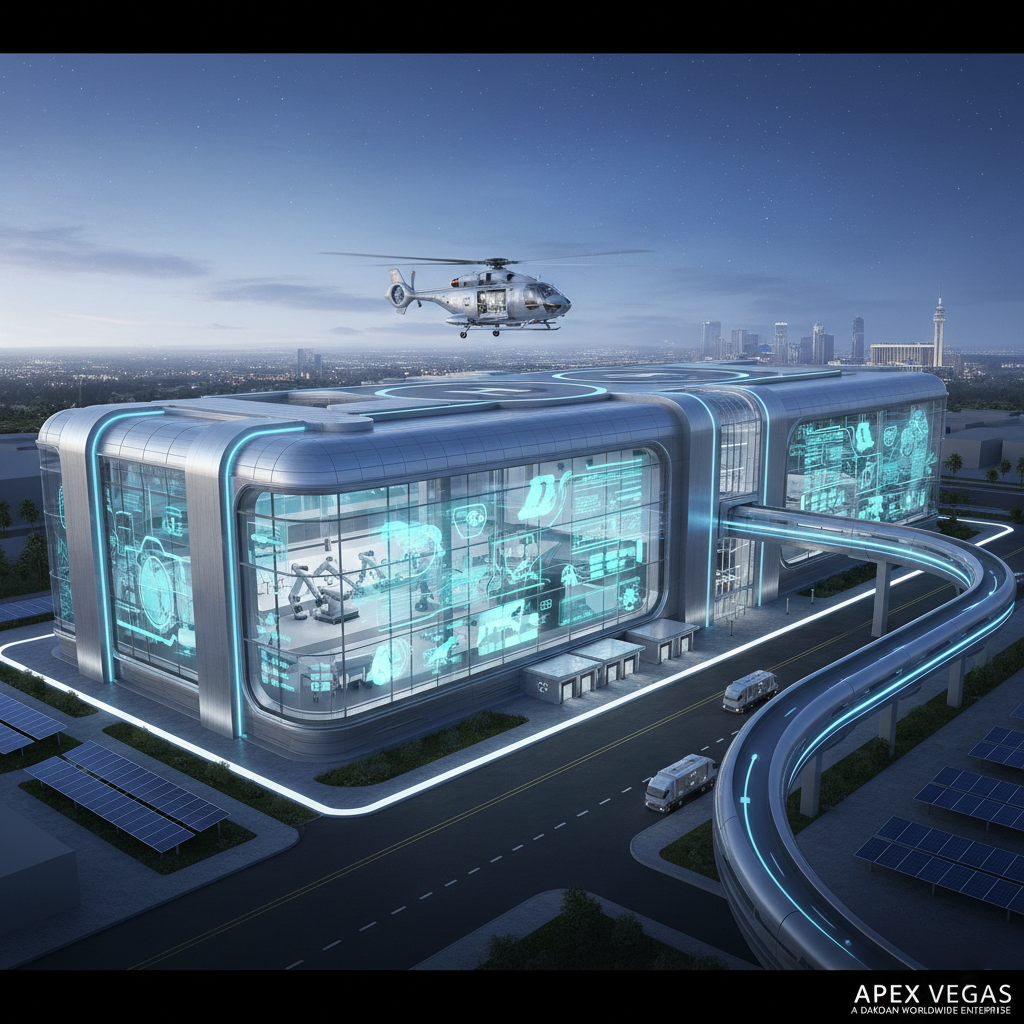
The centerpiece of Apex Las Vegas is a 60-story vertical medical campus housing the world's most sophisticated exotic animal hospital and research facility.
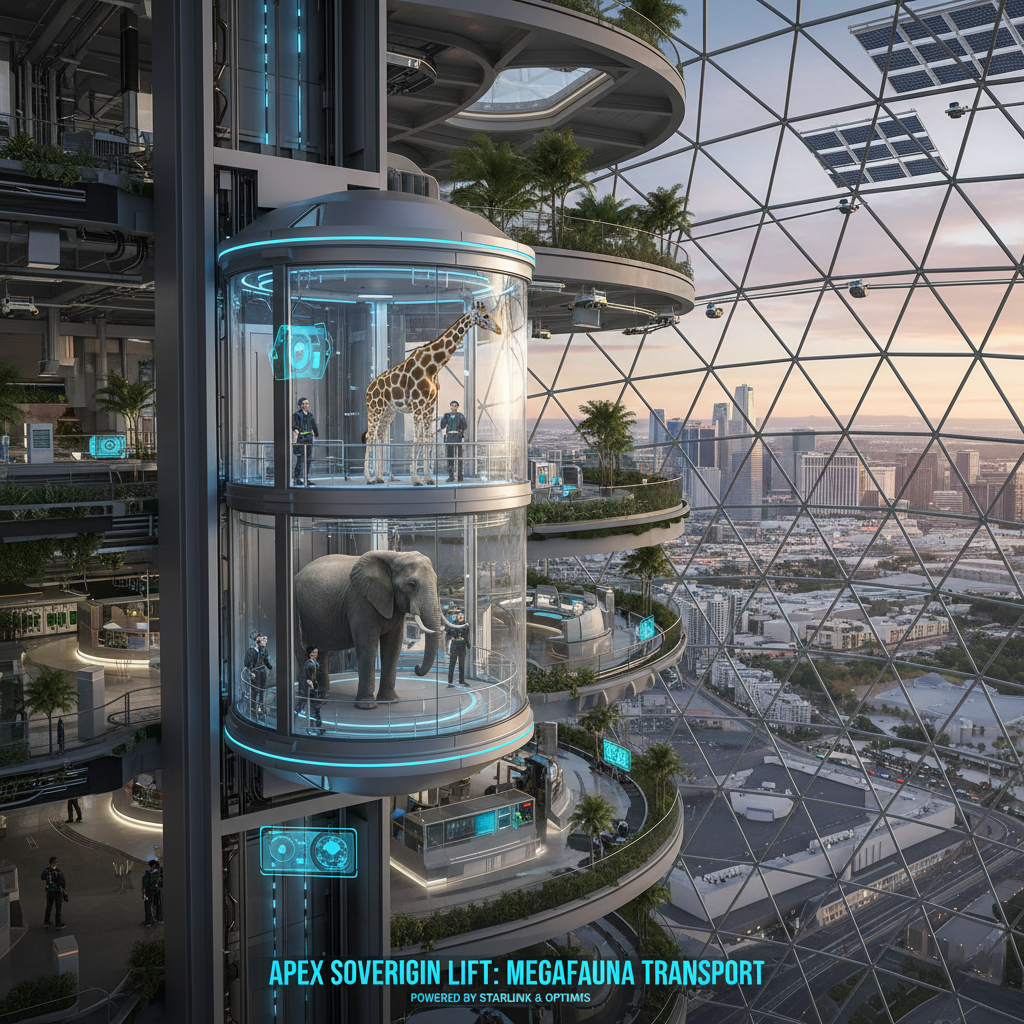
Global Patient Pipeline
A dedicated logistics system, the Animal Air Bridge, facilitates the safe international transport of exotic species for life-saving treatment. Apex will serve as a global referral center for veterinarians worldwide.
Tele-Robotic Surgery
Robotic surgery suites and 8K live-streamed observation decks enable veterinary collaboration across continents. Surgeons anywhere in the world can perform or assist in procedures via ultra-low-latency networks.

Regenerative Medicine Lab
A dedicated wing focused on 3D bio-printing organs and tissue for endangered species and the development of a Frozen Zoo genetic bank. This is the frontline of species preservation science.
Medical Device Testing
The campus serves as a Tier-1 testing ground for new medical devices, surgical robotics, and wearable biosensors. Partnerships with pharmaceutical and biotech companies generate licensing revenue that funds the conservation mission indefinitely.
One Health Data Division
Apex generates pristine biological data across a species range no other facility can access. This data is licensed to the global pharmaceutical industry, creating a high-margin revenue stream that directly funds ongoing conservation operations.
The Eight Bio-Domes
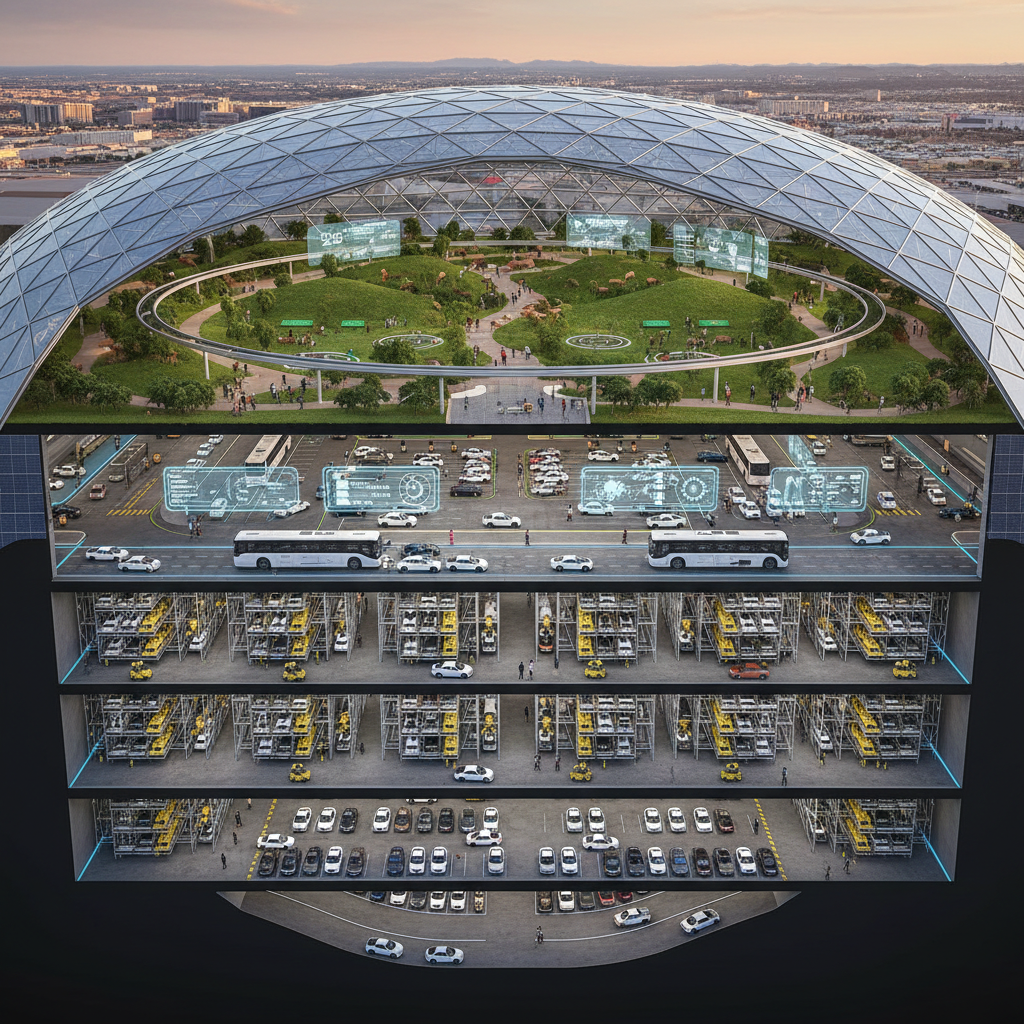
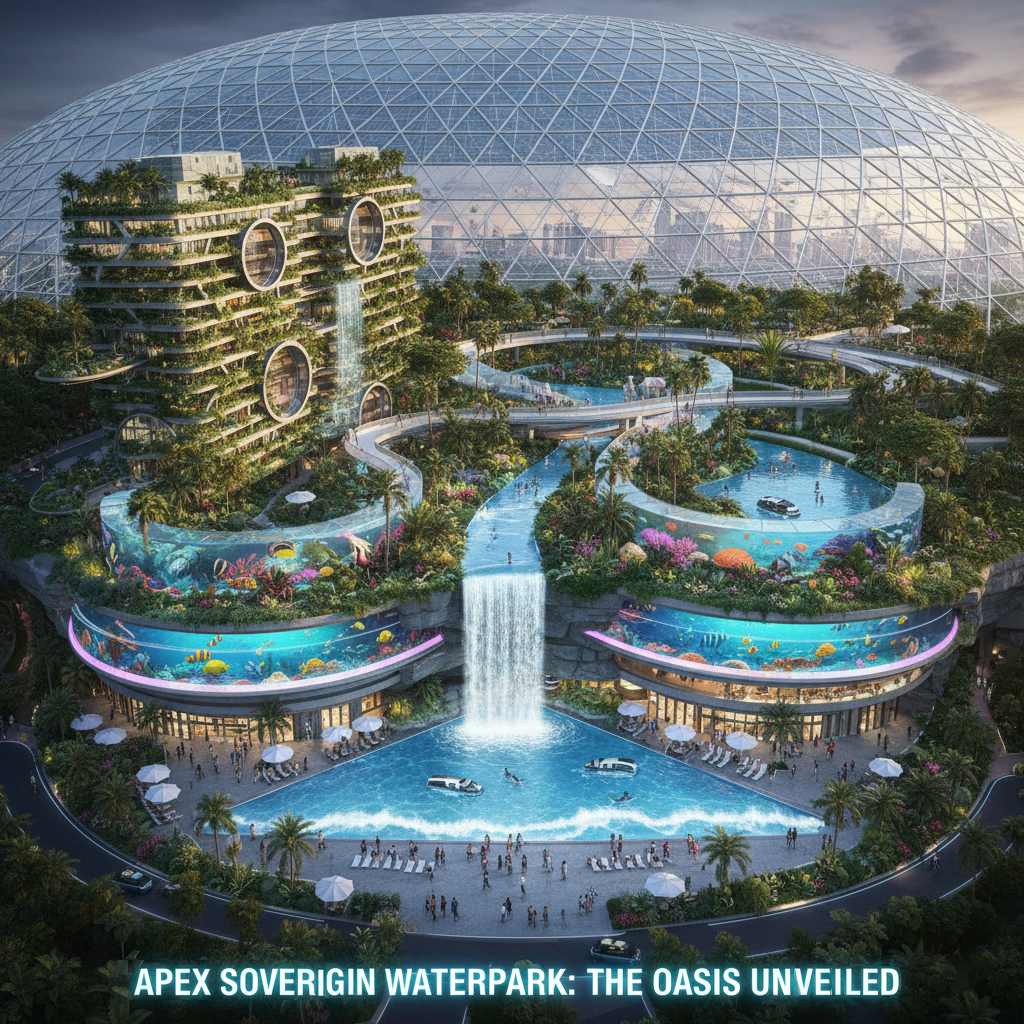
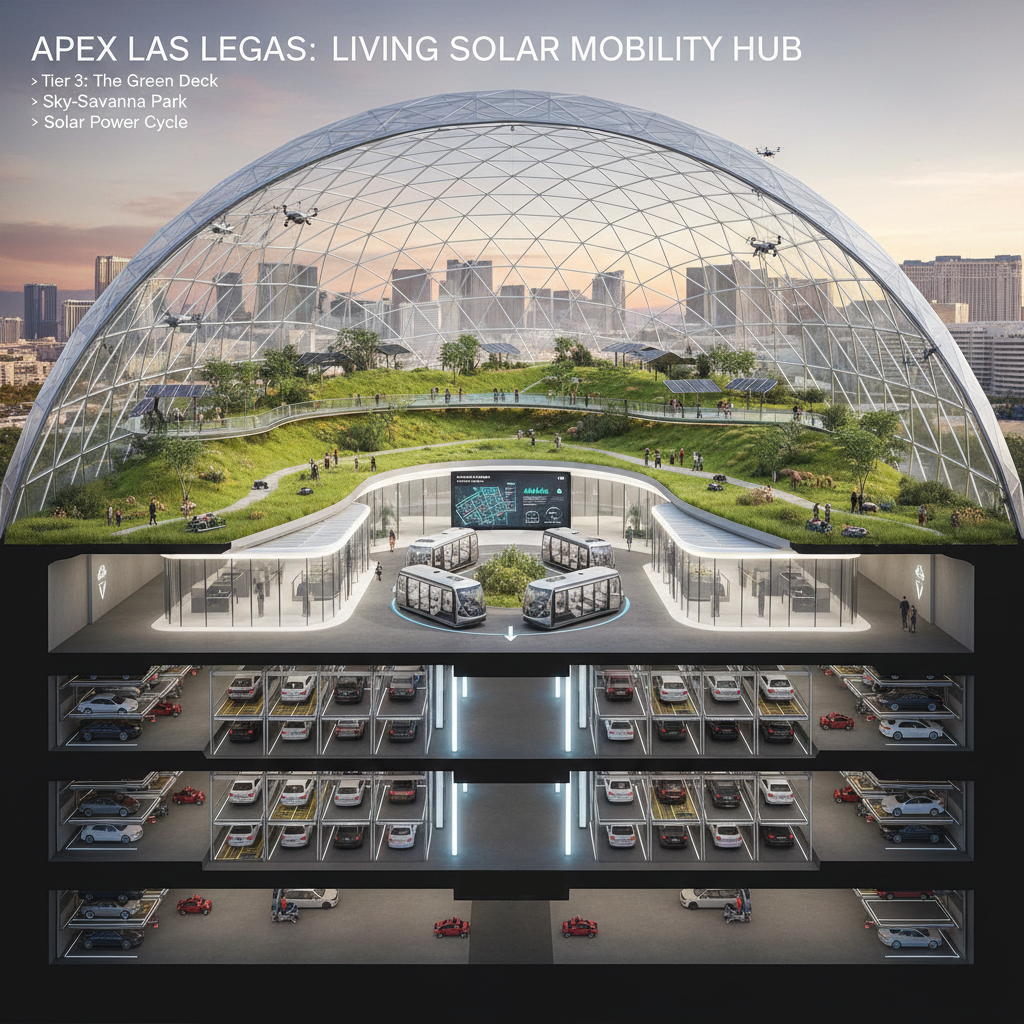
Eight massive, climate-controlled Bio-Domes surround the campus and serve as living habitats for species from every major ecosystem on Earth. These are not enclosures. They are AI-monitored environments where temperature, nutrition, and biological conditions are adjusted in real time based on individual animal biometric data.
Each dome offers a distinct ecosystem: Rainforest. Arctic. Savanna. Ocean. Desert. Mountain. Wetland. And a rotating Conservation Crisis Dome featuring species currently classified as critically endangered.
AR-Enhanced Experience
Guests move through AR-enhanced pathways, where augmented reality interfaces provide real-time information about the animals they encounter, the research being conducted, and the conservation actions underway. Passive observation is replaced by active engagement.
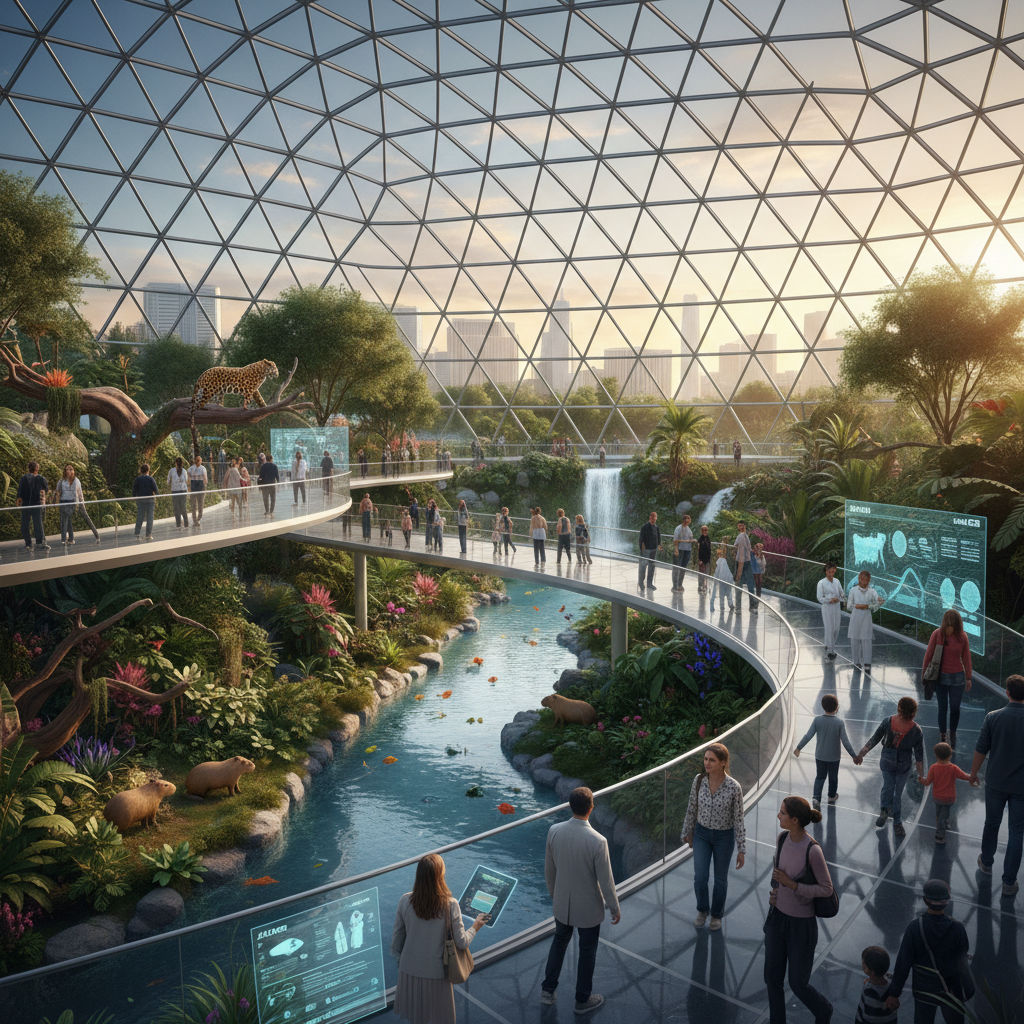
Rainforest
Tropical Humid Ecosystem
Dense multi-canopy habitat housing endangered primates, tropical birds, poison dart frogs, and exotic reptiles. Features include simulated rainfall, misting systems, and climbing structures for arboreal species like orangutans, spider monkeys, toucans, and macaws.

Arctic
Polar Climate System
Sub-zero climate-controlled environment for polar bears, arctic foxes, snowy owls, and emperor penguins. Features refrigerated rock formations, snow generation systems, and deep-freeze plunge pools with underwater viewing galleries for seal and penguin observation.
Savanna
African Grassland Habitat
Expansive grassland environment for African mega-fauna including elephants, giraffes, zebras, lions, and cheetahs. Wide-open plains with acacia trees, watering holes, and rocky outcrops. Natural predator-prey dynamics monitored by AI behavioral tracking systems.
Ocean
Marine Ecosystem
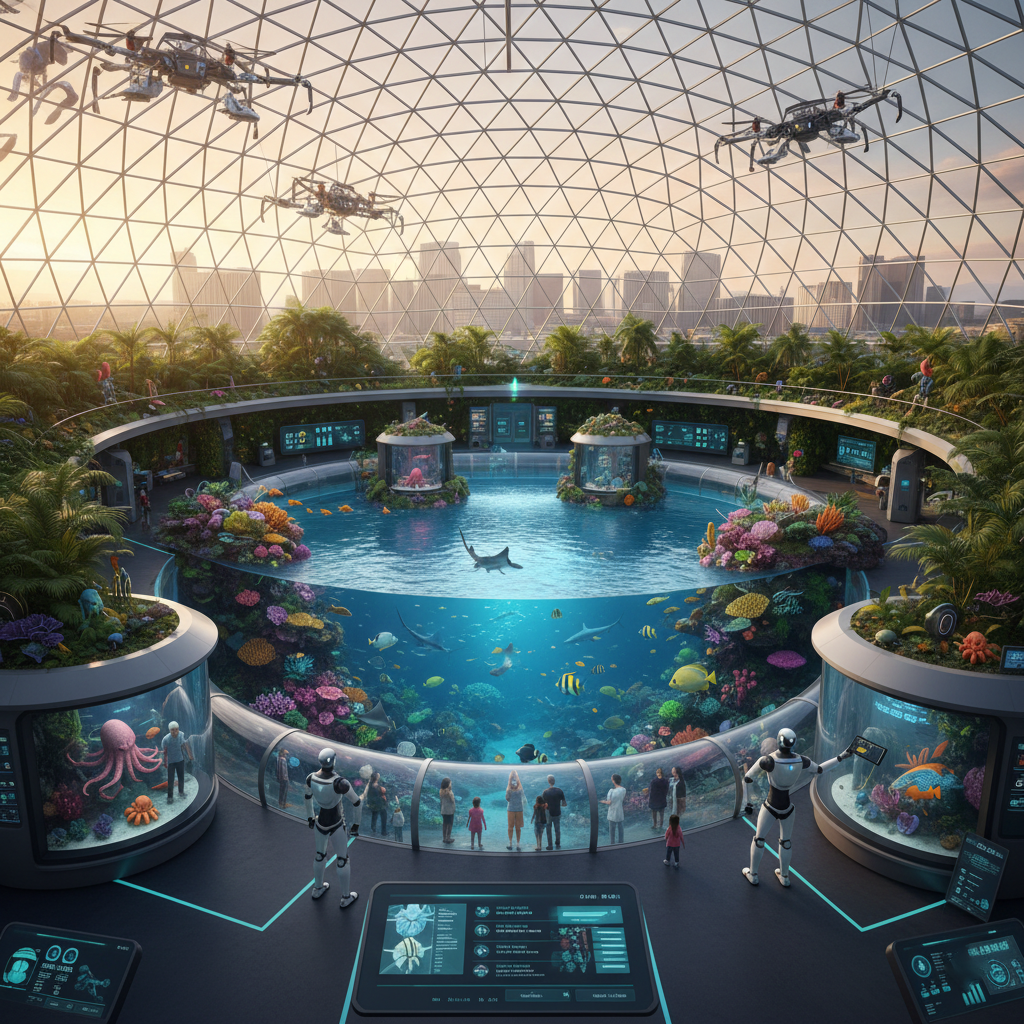
Multi-million gallon saltwater habitat with coral reef systems, kelp forests, and deep-sea zones. Houses sharks, rays, sea turtles, dolphins, and thousands of reef species. 360-degree acrylic tunnels and diving observation platforms allow guests to walk through living ocean environments.
Desert
Arid Climate Zone
High-temperature, low-humidity environment replicating the Sonoran and Sahara deserts. Home to desert tortoises, rattlesnakes, roadrunners, meerkats, and nocturnal species like fennec foxes. Features heat-resistant flora, sandstone formations, and nighttime cooling cycles.
Mountain
Alpine Highlands
Multi-elevation alpine habitat for snow leopards, red pandas, mountain goats, golden eagles, and Himalayan species. Features rock climbing walls, artificial peaks reaching 60 feet, cold-stream waterfalls, and seasonal snow generation for natural behavioral enrichment.
Wetland
Temperate Marsh Ecosystem
Freshwater marsh and swamp environment for alligators, river otters, herons, ibis, and amphibian species. Features mangrove-style root systems, boardwalk observation paths, and breeding grounds for endangered wetland birds and turtles. Natural filtration systems maintain water quality.
Crisis Dome
Rotating Emergency Habitat
Adaptive environment reconfigured quarterly to house critically endangered species requiring immediate intervention. Currently focused on Sumatran rhinos, vaquita recovery programs, and rapid-response breeding initiatives for species on the brink of extinction. Climate and terrain fully customizable.
Conservation Programs
Species Recovery
Apex works in coordination with the Association of Zoos and Aquariums (AZA), U.S. Fish and Wildlife Service, and the Global Environment Facility to fund and execute species recovery programs. Genetic banking ensures that even in worst-case scenarios, Apex preserves the biological heritage of the world's most vulnerable animals.
Research Partnerships
Academic partnerships with UNLV and global veterinary institutions create co-op programs, joint degree pathways, and ongoing clinical research that positions Nevada at the forefront of veterinary science.
Public Education
The conservation mission extends to every visitor. Bio-Dome docents, Zoo Media digital programming, live surgery observation suites, and the Apex Explorers youth program transform every visit into a substantive educational experience.
Sustainability as Conservation
Apex operates on a closed-loop model. This is not a sustainability program. This is the operating architecture.
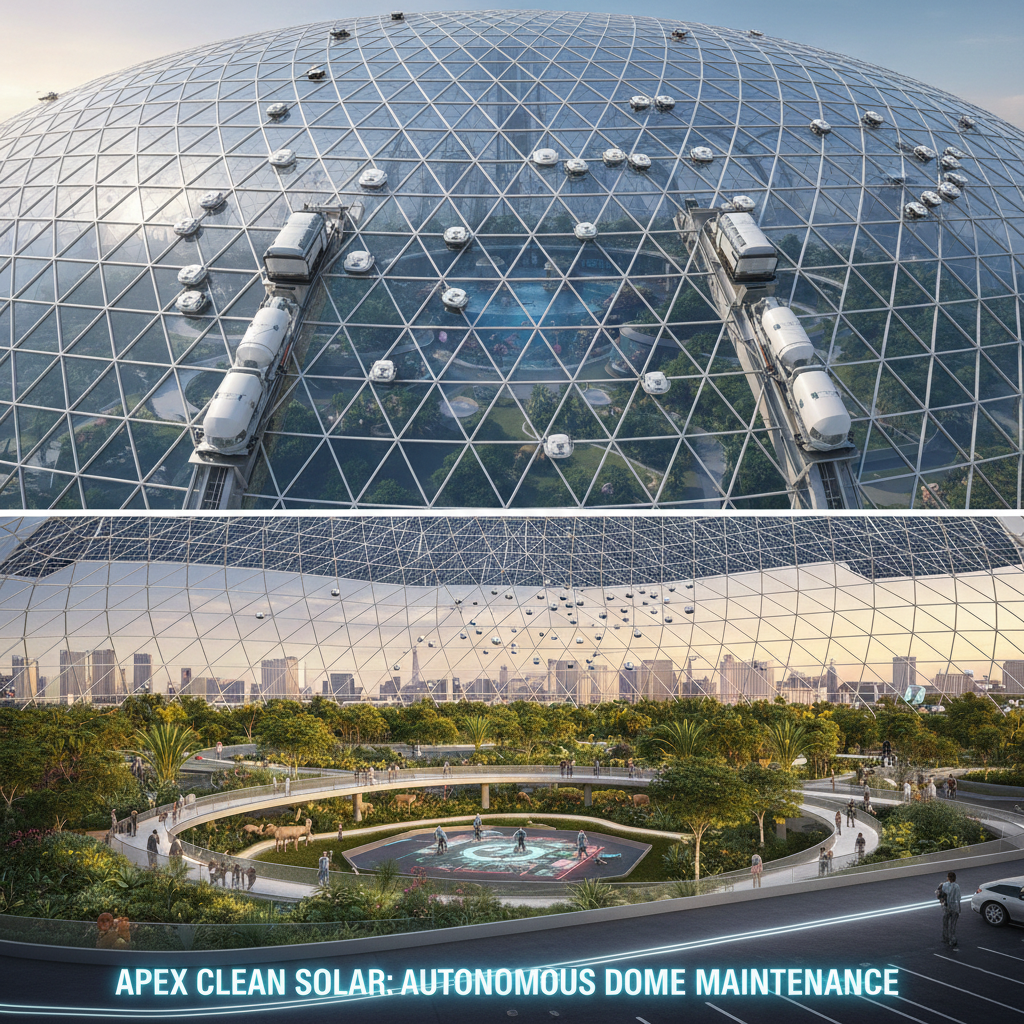
100% Renewable Energy
The entire campus operates on renewable energy generated through advanced solar glass façades integrated into every structure, rooftop photovoltaic arrays, and large-scale battery storage systems. Solar glass panels embedded in windows and exterior walls capture sunlight throughout the day while maintaining transparency. Energy storage infrastructure ensures 24/7 operation even during nighttime hours. Excess power generation is fed back into the Nevada grid, making Apex a net energy producer and creating a carbon-negative footprint.
Zero Single-Use Plastics
Apex eliminates all single-use plastics across the entire 200-acre campus. Guest water bottles are replaced with atmospheric water generation stations. Food service utilizes biodegradable plant-based packaging and reusable dishware systems. Animal enrichment toys and medical supplies are manufactured from sustainable materials including bamboo composites and recycled bio-plastics. This campus-wide initiative removes over 2.1 million plastic bottles from circulation annually and sets a global standard for plastic-free operations.
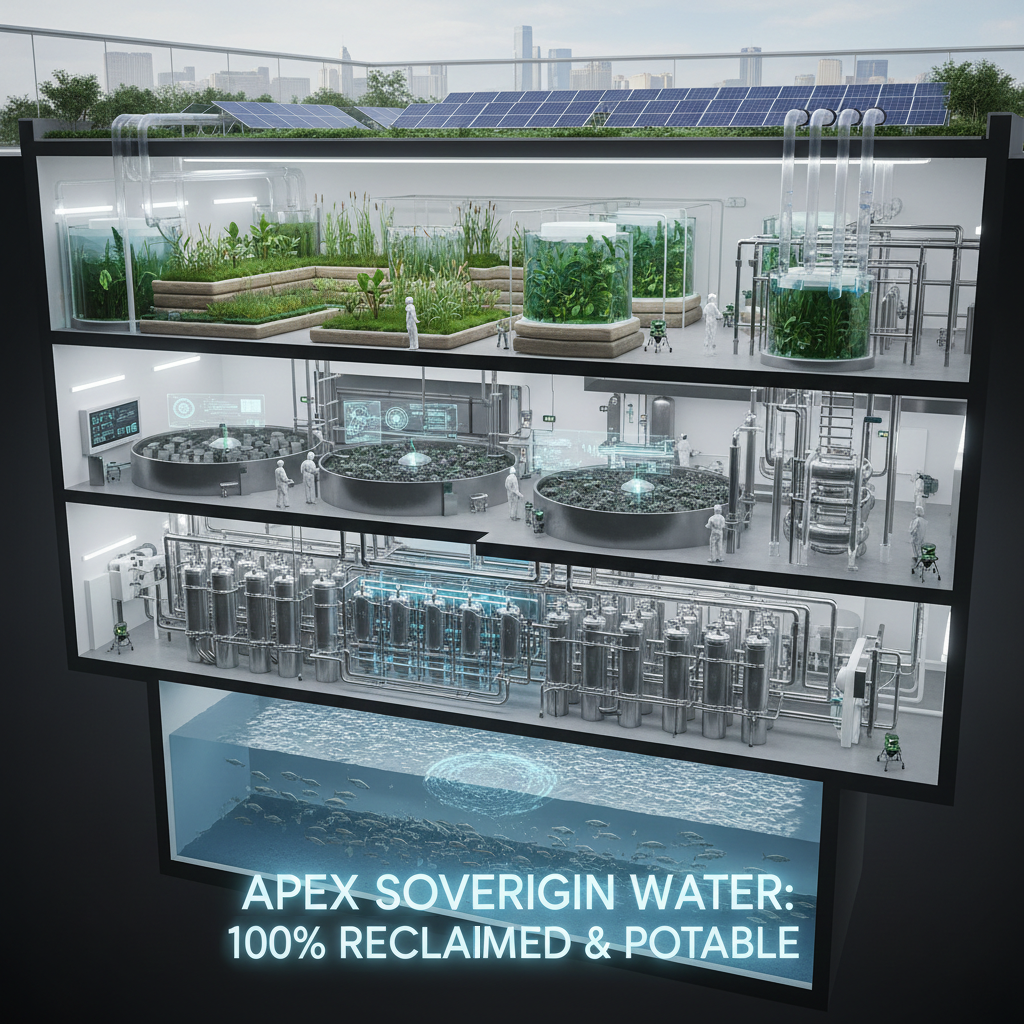
Closed-Loop Water Recycling
Water recirculation systems achieve near-100% efficiency across all campus operations. Greywater from hotels, restaurants, and guest facilities undergoes advanced filtration and UV treatment before being redistributed for landscaping and Bio-Dome irrigation. Atmospheric water generators extract moisture from desert air to supplement supply. Marine habitats utilize saltwater desalination with zero-discharge filtration. Stormwater capture systems collect seasonal rainfall for aquifer recharge. The campus eliminates reliance on municipal water infrastructure and operates as a self-sustaining water ecosystem in the Nevada desert.
On-Site Vertical Farms
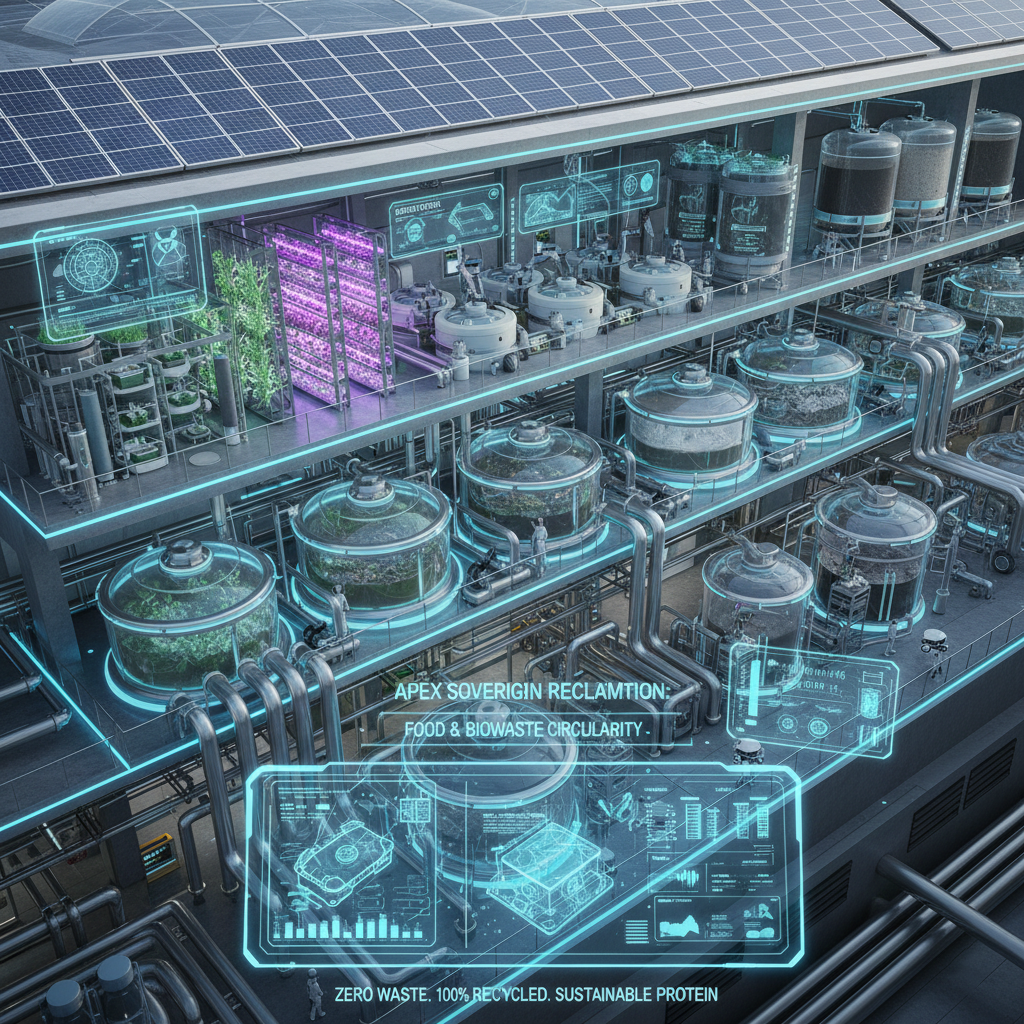
Multi-story hydroponic and aeroponic vertical farms produce fresh vegetation, fruits, and specialized nutrition for exotic animal diets year-round. AI-controlled LED spectrum lighting optimizes photosynthesis for each plant species. Automated nutrient delivery systems provide precision fertilization with zero agricultural runoff. Climate-controlled growing chambers eliminate pesticide requirements and reduce water usage by 95% compared to traditional farming. Vertical farms also supply produce for on-campus restaurants, creating a farm-to-table hospitality experience while minimizing food transportation emissions.
Pneumatic Waste Systems & Energy Recovery Center
A campus-wide underground pneumatic waste transport system eliminates traditional garbage trucks and odor issues. Organic waste from animal habitats, kitchens, and landscaping is routed through sealed tubes to central anaerobic digesters that break down material and capture methane biogas. This biogas is converted into electricity and heat, powering campus operations and Bio-Dome climate control systems. The facility processes over 400 tons of organic waste annually, generating renewable energy while producing nutrient-rich compost for vertical farms and landscaping. Zero waste reaches landfills, creating a truly circular economy within the Apex ecosystem.